Virginia-Highland Has Four Neighborhood Parks. Only One Belongs to the Neighborhood.
October 15, 2026
October 15, 2026
What does it cost to own a park that Fulton County values at $100?
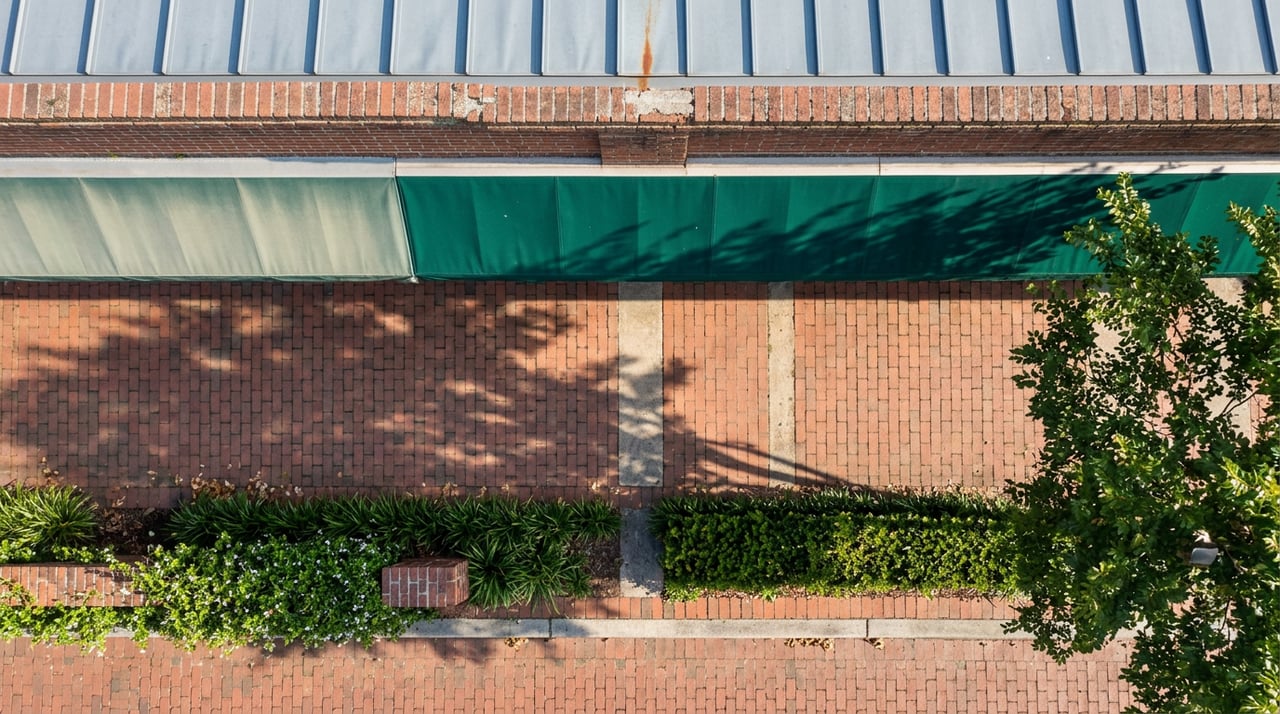
That's the assessed value of North Highland Park on the county's 2026 Notice of Assessment. It's the rain-garden corner at North Highland Avenue and St. Charles Place, where the commemorative bricks are set into the sidewalk. The Virginia-Highland Civic Association paid roughly $800,000 for the land in 2008. From 2016 through 2025 it spent another $116,312 keeping the park insured, mowed, watered and lit. No other park in the neighborhood costs the VHCA that kind of money, and the reason has nothing to do with size or use. North Highland Park is the only one the neighborhood owns.
In Virginia-Highland, ownership decides whether a volunteer dollar ends up as a new playground or as an insurance payment. This August the VHCA board had a chance to change that arrangement and voted to keep it.
The VHCA Parks Committee looks after four parks: John Howell Park, Orme Park, the Virginia-Highland Triangle Park and North Highland Park. The City of Atlanta owns the first three, and its Department of Parks and Recreation handles their basic maintenance. North Highland Park belongs to the neighborhood, so the VHCA carries its insurance, upkeep and liability by itself. The owner of record is technically the Virginia-Highland Residents Coalition, a 501(c)(4) subsidiary of the VHCA, so the park's finances are kept in a separate set of books.
The VHCA's own maintenance records for 2016 through 2025 show what that split costs:
| Park | Owner | VHCA maintenance spending, 2016–2025 |
|---|---|---|
| North Highland Park | VHCA, through its subsidiary | $116,312 |
| John Howell Park | City of Atlanta | $108,509 |
| Trolley Triangle | City of Atlanta | $12,328 |
| Orme Park | City of Atlanta | $3,502 |
The smallest park on the list costs the most. John Howell Park is the only one that comes close, and its total includes a burst of heavy maintenance in 2017 and 2018. Orme Park cost the association $3,502 across ten years because the city does the mowing.
Over the past decade the VHCA has put more than $260,000 into neighborhood parks, not counting the John Howell Park renovation campaign. More than 45% of that went to North Highland Park.
The association's July 28, 2026 findings report spells out the difference. At the city-owned parks, neighborhood money has paid for playgrounds, landscaping and hardscape. At North Highland Park, much of it covers insurance, lawn care and utilities, the same services the city provides free at its own parks.
Insurance is the hardest piece. A privately owned park that's open to the public is an unusual risk. The VHCA's broker has said only one carrier is willing to cover it, and that carrier now requires every event to be pre-approved and separately insured. Depending on the market or future claims, the broker said, coverage could eventually require fencing the park. The premium dropped to $1,908.98 in 2026, down from an estimated $2,704 a year before that. Trees are the other wild card. Removing one hazardous tree can cost $2,000 to $20,000, and a single removal in 2023 cost the VHCA about $4,000.
The insurance rules also cap how much happens at the park. In the subcommittee's survey, 164 of 213 respondents, or 77%, said they'd support structured activities like fitness classes or children's programs if proper insurance were in place. Under private ownership, each of those events needs its own insurance sign-off.
From 1952 until 1990 the corner was the Highland Branch of the Atlanta Public Library, which also served as a meeting space and a polling place. After the branch was torn down, the corner sat empty and passed through several private owners as two vacant lots zoned R4 for residential use.
In 2008 the City of Atlanta wasn't in a position to take a parcel under two acres into its parks system, and Fulton County wasn't interested. So the VHCA bought the lots for about $800,000 using a low-rate loan from the State of Georgia's Land Conservation Fund. A large gift from one neighbor and several strong Summerfest years paid the loan off early. Neighbors raised another $140,000 to build the rain garden, partly by selling the engraved bricks, and the park opened in 2013.
The subcommittee's view is that the $800,000 should be seen as the cost of saving green space, not as the purchase of a financial asset. The $100 assessment fits that view.
The two-acre barrier appears to have eased. In spring 2026, Councilmember Liliana Bond and Parks Commissioner Justin Cutler met at the park. Cutler indicated the city would be willing to receive it by warranty deed, which would keep the existing deed restrictions that require the land to stay green space. Bond later contacted interim Parks Commissioner Doug Voss to continue talks about a possible gift. The findings report laid out what a transfer would change. The city would pay for insurance, utilities, mowing, landscaping and tree work, and the VHCA could spend its money on the lighting, seating and programming neighbors asked for in the survey.
The survey showed more support for that path than for any other single option if continued ownership became unsustainable. Only 30% of respondents called VHCA ownership very important.
The report also argued the other side. Under VHCA ownership, improvements don't wait on city permitting, budgets or approvals. A gift to the city can't be undone unless the city decides to give the land back. And Third & Urban, which recently bought much of the commercial block across North Highland Avenue, has said it's interested in helping activate the park with programming and events.
At its August 10 meeting, the board voted on a carefully conditioned transfer motion. Under its terms, the transfer would happen:
"by warranty deed, and the City must continue to recognize and preserve the existing deed restrictions that require the property to remain green space, permanently."
The motion also required the land to return to the VHCA if the city ever tried to use it for anything other than public green space, and it made the transfer depend on legal review and a vote of the full membership. The recorded vote was 4 in favor and 7 opposed. You can read the motion and the vote in the August 10 board minutes. The Atkins Park Neighborhood Association said at that meeting that it's discussing a Friends of North Highland Park group if the VHCA keeps the park. A Friends group matters because private property can't join Park Pride's "Friends of Park" program, which gives groups at city parks a tax-exempt way to raise and hold money.
As of the latest published minutes, that's where the question stands. A $10,000 gift this spring is expected to cover the park's costs into spring 2027, barring surprises.
A few blocks away, the other model is building a playground. John Howell Park sits on land neighbors saved from the I-485 freeway project, which razed 11 homes on Virginia Avenue. Because the city owns the land and covers basic maintenance, neighborhood fundraising there can go straight into construction.
Phase 1, which the VHCA calls the Adventure Zone, covers the west side of the park:
The funding mix reflects city ownership. Atlanta committed $300,000 through the Moving Atlanta Forward bond program, and Park Pride awarded $100,000 for playground equipment, toward a $950,000 goal. The two most recent totals don't line up. The Friends of John Howell Park campaign update on July 1, 2026 reported $680,000 raised. The later August 10 board minutes listed $666,000 in total, including $266,000 from the community, and neither source explains the gap. The same minutes said a $300,000 grant with Cox was in the works, with a decision expected this month, and that the city has approved the plan. No announcement on that grant or a construction start has been published yet. Phase 2 comes after that and will restore the Great Lawn and turn the oval near Barnett Street into a space for parties and yoga.
All four parks depend on volunteer hours, whoever holds the deed. These are the dates on the calendar:
Living near one of these parks, or buying close to one, raises questions a listing sheet doesn't answer: who maintains the green space next door, and what's planned for it. Ginger Pressley can walk you through what's happening on your block in Virginia-Highland. Call or email Ginger to start the conversation.
This article is general information, not legal, tax or financial advice. Consult a qualified professional about your situation.
Stay up to date on the latest real estate trends.
For anyone looking to dip their toe into the real estate market, broaden their asset portfolio, or build wealth in real estate, reach out to Ginger to start your journey.